
Key takeaways
- Coffee processing innovation has accelerated considerably over the last decade.
- Many niche processes originate at a single farm or with a single producer.
- Intellectual property and patent registration are standard when developing new plants, which are often widely distributed.
- Processing is harder to protect than varieties because outcomes vary widely.
Coffee processing has always been evolving. Natural processing, which originated in Ethiopia and Yemen as early as the 9th century, was the standard method until washed processing emerged in the Caribbean and Southeast Asia during the 1700s. Later, in the late 2000s, honey processing gained popularity in Costa Rica and then spread to many other coffee-growing regions.
Over the last decade, however, producers have introduced new processing methods at a much faster rate. They have developed more experimental techniques to target specific flavour profiles, command higher prices, and differentiate their offerings. As buyers and consumers embraced these new flavour experiences, terms like aerobic, anaerobic, and lactic fermentation became part of the specialty coffee lexicon.
Within this already niche category of experimental processing, a smaller group of highly specific methods has emerged – processes like thermal shock, koji fermentation, and washed-symbiotic. In most cases, these micro-niche processes originate from a specific farm or producer. As they gain commercial value, some producers may want to protect the techniques they developed.
This reopens a debate the industry has already had over varieties and blends. At its centre is the question of whether anyone can “own” part of the supply chain when other stakeholders can copy it or draw inspiration from it, whether intentionally or not.
You may also like our article on whether blends can be intellectual property for roasters.

Why claiming “ownership” over processing is complex
Given their extensive history, no one farm or producer can claim to have invented washed or natural processing. But it’s a different story for more modern, niche processing techniques.
TyOxidator (or “tyOxidator”, or “Tyoxi”) offers a clear example of a named, hyper-specific method tied to a single farm. Pepe Jijón, who owns Finca Soledad in Ecuador’s Intag Valley, developed the process for the Typica Mejorado variety.
“It’s a wild-derived process, so results aren’t always consistent, and it only represents a very small amount of our yield because it’s so hard to achieve,” he says. “It ties into my focus on ecosystem preservation and working hand in hand with nature. Yields and tasting notes are secondary.”
Pepe describes TyOxidator as a natural wild terroir-based process that works alongside the farm’s natural ecosystem. Ripe cherries first ferment in open air, which encourages oxidation. Finca Soledad then pulps the coffee and ferments it in its mucilage in a sealed tank for 48 hours before washing. The team then dries the coffee in a dark room at 16°C for 22 days, with several stabilisation pauses at high moisture in sealed bags.
Finally, the coffee spends time in indirect sunlight, which Pepe says “seals” the process and prevents unwanted fungi from developing after the long period without light.
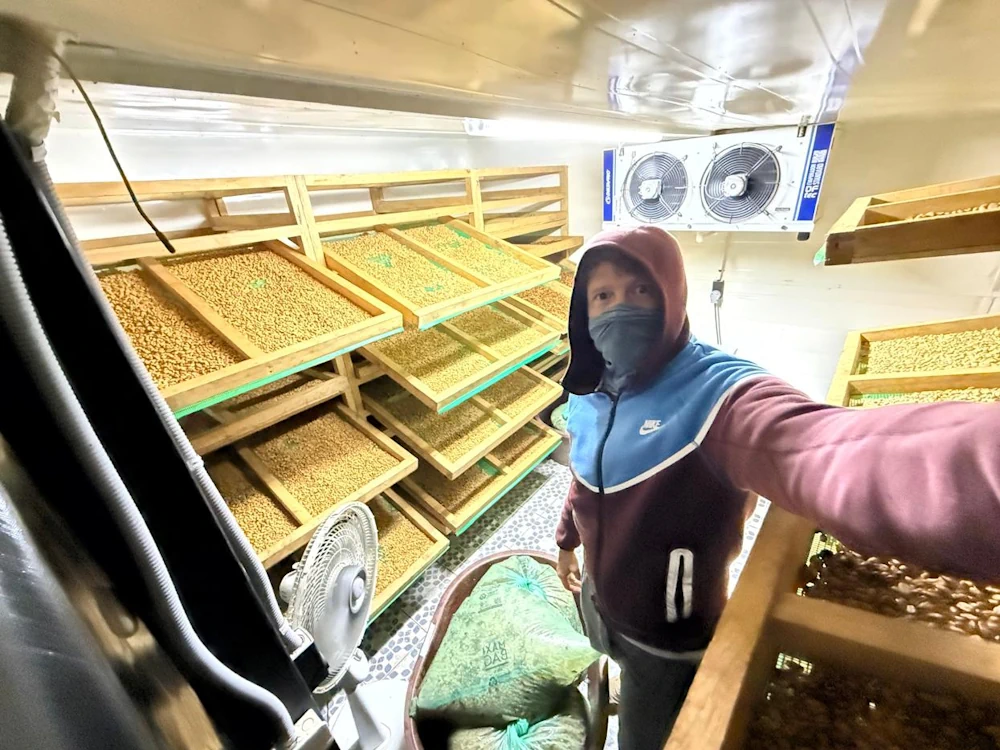
TyOxidator’s name, and the process itself, is unique, but Pepe doesn’t believe claiming “ownership” is the right approach. He says the processing method depends on too many environmental variables, including soil, insects, biomass, natural yeasts, fungi, mycelium, variety, altitude, and longitude. The final flavour outcome therefore can’t be tied specifically to processing.
“Drying is far more important than fermentation per se,” Pepe says. As a result, two lots processed using TyOxidator on different farms would likely taste very different. For this reason, Pepe makes no attempt to protect the method. “I share all I do with the world just for the sake of creating awareness and inspiring others,” he says.
Instead, he focuses on preserving the farm’s ecosystem. “We are not an extraction farm,” he says. “We seek to empower nature to take over and bring back balance. Taste may follow, or not.”

Coffee processing as intellectual property?
The pioneers of hyper-specific processing have spent months, and in some cases years, developing and refining their techniques. As these processes become more recognisable and potentially more valuable in specialty coffee, producers may increasingly see them as assets worth protecting.
Registering intellectual property and patents is standard practice in developing new technology, including plants and seeds. The United States Patent and Trademark Office issued 1,398 plant patents in 2020, and 788 plant patents out of 346,152 total patents in 2023.
Organisations register many of these patents for research purposes. In the coffee sector, research centres such as the Honduran Coffee Institute (IHCAFE) and Scott Agricultural Laboratories (SAL) have developed new hybrid varieties for wider distribution. As a result, the benefits tend to reach a wide range of producers rather than giving large institutions a market advantage.
Some corporations have taken a similar approach. In September 2023, Starbucks released six climate-resistant varieties through its Hacienda Alsacia research centre in Costa Rica and made them available to farmers free of charge.
In the same month, Nestlé launched N°20, a hybrid arabica variety it developed over 20 years. Farmers grow N°20 exclusively in Colombia for Nespresso capsules, and the company restricts production to its own facilities to reduce the risk of legal complications.
Processing, by contrast, is a series of steps that turns harvested coffee cherries into stable, dry green coffee beans. This makes it much harder to patent or protect than a single coffee variety.

Why sharing processing knowledge can benefit producers more
Producers have clear reasons to protect the niche processing methods they develop. Pioneers often spend months or years experimenting, absorbing the cost of failed lots and new equipment before a technique works consistently.
“Owning” the method, or at least its name, could allow them to recoup investment by selling exclusive lots at higher prices. It may also prevent other farms from marketing lower-quality coffees under the same name, which could damage the method’s reputation and the original producer’s standing with buyers.
However, sharing processing knowledge offers practical advantages for producers, particularly smallholders with limited resources. Registering and enforcing intellectual property requires legal fees, technical documentation, and ongoing monitoring, costs many farms would struggle to cover. Even with protection in place, proving that another farm has copied a method would be difficult, given how much processing varies from one farm to the next.
Open knowledge, by contrast, lets producers learn from each other’s successes and failures. Experimental processing carries financial risk, as a single failed fermentation can ruin an entire lot. When producers share what has and hasn’t worked, others can test new methods with fewer costly mistakes.
Producers who share their techniques can also build recognition and trust with buyers. Being known as the originator of a respected method can strengthen a farm’s profile, which in turn can lead to longer-term relationships and more consistent premiums.

As experimental processing gains commercial value, more producers may weigh up whether to protect the methods they develop. Owning a name or technique could help pioneers recoup their investment, but legal costs and terroir’s influence make enforcement difficult.
For many producers, particularly smallholders, sharing knowledge openly may offer greater long-term value through reduced risk, recognition, and stronger buyer relationships.
Need more leads for your coffee business? Get in touch with PDG Media, our marketing agency dedicated to specialty coffee, here.
Coffee processing and intellectual property FAQs
Why might a producer want to “own” a processing method?
Pioneers often spend months or years developing a method, absorbing the cost of failed lots and new equipment. “Owning” the method or its name could help them recoup that investment through exclusive lots and stop other farms selling lower-quality coffee under the same name.
Why is processing harder to protect than a coffee variety?
A variety is a distinct plant that organisations can register or control, as Nestlé does with N°20. Processing involves a series of steps, and flavour also depends on soil, microbes, altitude, and drying, so results vary considerably between farms.
How does sharing processing knowledge benefit smallholders?
Smallholders often lack the funds to register and enforce intellectual property. Sharing knowledge lets producers learn from each other’s successes and failures, reducing the risk of losing entire lots, while originators can build recognition and stronger relationships with buyers.
Perfect Daily Grind
Want to read more articles like this? Sign up for our newsletter!